Thursday, May 18, 2017

Equine herpes virus more stable than previously thought


A new study challenges the belief that herpes viruses are relatively unstable outside their host. 


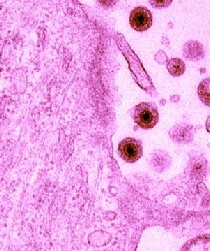
Herpes viruses, such as EHV-1, have a lipid-containing envelope surrounding the viral DNA.  The envelope is relatively sensitive to desiccation, heat and detergents. This makes these viruses more susceptible to disinfectants than non-enveloped viruses. Typically, they only survive for a limited time outside the host, and tend to spread directly from one animal to another.


The research found that, equine herpesvirus remained stable and infectious over a three-week period, under a variety of conditions. This suggests that untreated water could be a source of infection by some herpesviruses.
Using GPS units to monitor behaviour of mares and foals


Researchers in Japan have shown that Global positioning System (GPS) units could be useful in studying mare and foal behaviour.

By recording the positions of the mare and the foal at the same time they could calculate the distance between them. They could then monitor the way the distance between each mare and her foal changed as the foal grew.

Thursday, November 24, 2016

Updated HBLB app


An update to the EquiBioSafe app has just been released with changes to EHV advice based on recent outbreaks and some minor changes to handling CEM in maiden mares. The vaccine calculator has been updated.

EquiBioSafe covers all the key elements of contagious disease prevention and control based on the important Codes of Practice for breeders and trainers. Although developed for the British market, much of the information is relevant around the world.

Sponsored by the Horserace Betting Levy Board (HBLB), the app contains both HBLB codes for breeders and NTF codes for trainers, and also some general information and links to webinars and resources relevant to all horse types.

EquiBioSafe is primarily designed for Thoroughbred breeding farm and racing stable staff, farm managers, racehorse trainers and their vets but it will be useful to all horse owners and managers and the biosecurity guidelines apply to all horse premises, large and small.