Showing posts with label prehistoric horses. Show all posts

Wednesday, November 12, 2025

300,000-year-old equine genomes reveal deep roots of modern horses

The fossilized remains of at least 20 hunted horses were found right next to the famous Schöningen spears.
The fossilised remains of horses found
next to hunting spears at Schöningen
. (c) Nicholas Conard
  For the first time, scientists have reconstructed the genomes of an extinct horse species, Equus mosbachensisthat lived around 300,000 years ago in what is now Lower Saxony, Germany. The achievement, announced by researchers from the Senckenberg Centre for Human Evolution and Palaeoenvironment at the University of Tübingen and the Schöningen Research Centre, represents a breakthrough in the study of horse evolution.

Thanks to exceptionally favourable preservation conditions at the archaeological site of Schöningen, the team was able to extract the oldest DNA ever recovered from an open-air site, pushing back the known survival limit of ancient DNA beyond 240,000 years. Their findings, published in Nature Ecology & Evolution, reveal that the Schöningen horses belong to a genetic lineage that ultimately gave rise to all modern horses.

Modern domestic horses, along with donkeys and zebras, all belong to the genus Equus, the sole surviving branch of a family that once included over 35 genera and hundreds of now-extinct species. Fossils trace the equine family tree back around 55 million years, making it one of the most thoroughly studied lineages in evolutionary history.

“This family is one of the most thoroughly researched animal groups in evolutionary history. Their fossils can be traced back over a period of around 55 million years,” explains Prof. Dr. Cosimo Posth from the Senckenberg Centre for Human Evolution and Palaeoenvironment at the University of Tübingen, 

He continues, “For a long time, genetic research focused primarily on changes caused by the domestication of horses in the recent past. But to understand the evolution of the horse, yoflssilu also have to examine their earlier history. Archeological finds, for example, show that horses already played a central role for early human species, particularly as a source of food.”

Arianna Weingarten, doctoral researcher and the study’s first author explains, “Schöningen is famous for its wooden spears which date back around 300,000 years ago and are the oldest known complete hunting weapons in the world.”

“The fossil remains of at least 20 hunted horses were found right next to the spears. Impressive evidence of the close relationship between humans and horses long before they were domesticated,” she added. Our study’s aim was to clarify the position and origin of Equus mosbachensis in the equine family tree and to better understand the genetic relationship to today’s horses.”

Recovering DNA from material this oldand from an open-air site rather than a cave or permafrostis a major technical leap. Normally, exposure to oxygen, microbes, and temperature fluctuations destroys genetic material over time. But at Schöningen, the horse bones had lain preserved in waterlogged, low-oxygen sediments, creating natural conditions that shielded the DNA for hundreds of millennia.

Using carefully selected samples from the dense inner portions of petrous bones (a part of the skull known for its DNA protection) and new bioinformatic methods, the team reconstructed two largely complete mitochondrial genomes.

“Until now, it was found that DNA could only be preserved for a maximum of around 240,000 years outside caves or permafrost. The Schöningen horses now push back this limit significantly,” says co-author Häusler. She continues, “Normally, DNA decays quickly in open air contexts because temperature changes and microbes destroy the genetic material. But in Schöningen, the bones were preserved in permanently moist, low-oxygen sediments. This unique environment likely acted as natural protection.”

The genetic analysis revealed that the Schöningen horses fall within a lineage ancestral to all modern horsesincluding today’s domestic breeds. This finding bridges a long-standing gap between early fossil horses and the animals that eventually spread across Eurasia and North America.

Over the course of horse evolution, Equus ancestors repeatedly crossed the Bering Land Bridge between Asia and North America. Two major migration waves are known: the first, around 2.6 million years ago, led to the ancestors of today’s zebras and donkeys; the second, about 900,000 years ago, brought the so-called “caballine” horses — the group from which modern horses ultimately descend.

Many branches of this family tree, including Equus mosbachensis, later went extinct. But the Schöningen DNA shows that their genetic legacy continued.

“With our study, we were able to fill a temporal and geographic gap in the study of horse evolution,” says Posth.  “Our results also show that surprisingly even in seemingly unfavourable environments, such as open-air excavation sites, extremely ancient DNA can still survive and be recovered. This opens up the possibility of extending our method to other species, thereby uncovering the genetic diversity of the distant past.” 

Such studies also remind us how long the human–horse connection has existed. While domestication didn’t occur until around 5,500 years ago, the Schöningen find shows that humans were already interacting closely with horse populations hundreds of thousands of years earlier. 

For more details, see:

Arianna Weingarten, Meret Häusler, Jordi Serangeli, Ivo Verheijen, Ella Reiter, Rita Radzevičiūtė, Alexander Stoessel, Johannes Krause, Maria A. Spyrou, Nicholas J. Conard, Kay Nieselt & Cosimo Posth.

Mitochondrial genomes of Middle Pleistocene horses from the open-air site complex of Schöningen. 

Nat Ecol Evol (2025). 

https://doi.org/10.1038/s41559-025-02859-5

Thursday, June 06, 2024

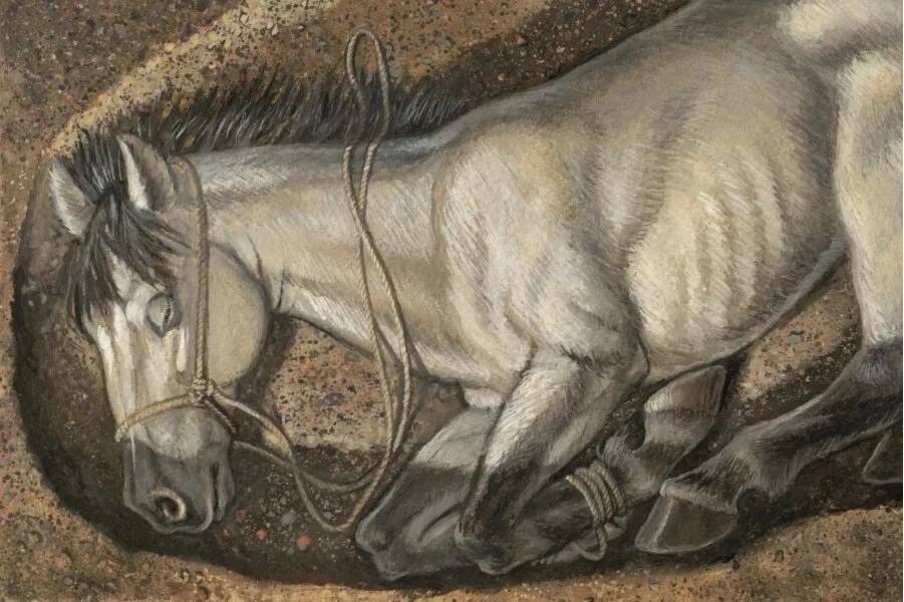
Ritual horse sacrifice in Baltic region in the Middle Ages

Artists impression. Credit: Miroslav Kuzma
 Research from Cardiff University indicates that during the Late Viking Age, horses were transported across the Baltic Sea in ships and sacrificed in funeral rituals. Published in the journal Science Advances, studies on horse remains found at ancient burial sites in Russia and Lithuania show that these animals were brought from Scandinavia via extensive trade networks connecting the Viking world with the Byzantine and Arab Empires.

Horse sacrifice was practiced in various parts of Europe during ancient and medieval times for religious, ceremonial, and symbolic purposes. While the practice varied across different regions and periods, it remained a significant aspect of ancient spiritual and cultural life.


Up to now, researchers had believed sacrificial horses were always locally-sourced stallions. But these results reveal some horses had travelled up to 1,500 km across the Baltic Sea from modern-day Sweden or Finland. The findings also show that the sex of the horse was not necessarily a factor in them being chosen for sacrifice, with genetic analysis showing one in three of these horses were mares.


The research team used a scientific technique called strontium isotope analysis on 74 horse teeth from ritual burial sites to identify their origins. 


Strontium, a naturally occurring element in rocks, soil, and water, has different isotope ratios in various geological formations. As plants absorb strontium and animals consume these plants, the strontium gets incorporated into their bones and teeth. The ratio of 87Sr to 86Sr in a sample reflects the geological signature of the area where the animal lived or fed.


Teeth are particularly valuable for this analysis because they form at specific periods in an animal's life and do not remodel after formation, preserving the strontium isotopic signature of the environment at the time of their formation. This allows archaeologists to trace the life journeys of animals hundreds of years later.


Horse sacrifices were highly visible and symbolic public rites across pagan prehistoric Europe, persisting the longest among the Baltic tribes, up to the 14th century AD. Offering pits might include multiple horses, single complete horses, or partial animals. In many Baltic cemeteries, horses were buried separately from humans, though there are numerous examples of horses buried with overlain human cremations.


In a press release, lead author Dr Katherine French, formerly of Cardiff University’s School of History, Archaeology and Religion, now based at Washington State University, said: “This research dismantles previous theories that locally procured stallions were exclusively selected for sacrifice. Given the unexpected prevalence of mares, we believe the prestige of the animal, coming from afar, was a more important factor in why they were chosen for this rite.


“Viking Age trade routes stretched from modern Iceland, Britain, and Ireland in the West all the way to the Byzantine and Arab Empires in the East. The presence of a trader’s weight in one horse grave points to the key role of horses in these vibrant trade networks.”


Co-author Dr Richard Madgwick, also based at Cardiff University’s School of History, Archaeology and Religion, said: “Pagan Baltic tribes were clearly sourcing horses overseas from their Christian neighbours while simultaneously resisting converting to their religion. This revised understanding of horse sacrifice highlights the dynamic, complex relationship between Pagan and Christian communities at that time.”


This project received funding from the EU Horizon 2020 scheme, Polish Ministry of Science and Higher Education, National Geographic Society, Society for Medieval Archaeology, Alexander von Humboldt Foundation, Deutsche Forschungsgemeinschaft, and Cardiff University.


For more details, see:


French, K. M., Musiał, A. D., Karczewski, M., Daugnora, L., Shiroukhov, R., Ropka-Molik, K., Baranowski, T., Bertašius, M., Skvortsov, K., Szymański, P., Mellin-Wyczółkowska, I., Gręzak, A., Wyczółkowski, D., Pluskowski, A., Andersen, M., Millet, M. A., Inglis, E., & Madgwick, R. (2024). 

Biomolecular evidence reveals mares and long-distance imported horses sacrificed by the last pagans in temperate Europe. 

Science advances, 10(20), eado3529. 

https://doi.org/10.1126/sciadv.ado3529


press release:  https://www.cardiff.ac.uk/news/view/2814957-pagan-christian-trade-networks-supplied-horses-from-overseas-for-the-last-horse-sacrifices-in-europe


video: https://www.youtube.com/watch?v=AbMbvXKv_AA

Thursday, March 16, 2023

The world’s first horse riders

Excavations in Malomirova, Bulgaria (c) Michal Podsiadlo

New evidence suggests that people were riding horses as much as 5000 years ago.

The origins of horseback riding are still unknown. Research suggests that horses were domesticated for their milk around 3500 to 3000 BCE. However, this does not conclusively demonstrate that they were being ridden at that time.

Now, researchers have unearthed evidence of horse riding by analysing the remains of human skeletons discovered in ancient burial mounds dating back 4500-5000 years.


The earthen burial mounds, or “kurgans”, were associated with the Yamnaya culture. The Yamnaya people were nomadic herders who primarily raised cattle and sheep, and they migrated to present-day Romania, Bulgaria, Hungary, and Serbia from the Pontic-Caspian steppes. This region is a vast area of grasslands and semi-arid plains situated in Eastern Europe and Western Asia, spanning from the Danube River in the west to the Ural Mountains in the east, and from the Black Sea in the south to the Volga River in the north. The area encompasses parts of modern-day Ukraine, Russia, Kazakhstan, Romania, Moldova, and Georgia.


According to a study published in Science Advances, researchers have identified five Yamnaya individuals, dated from 3021 to 2501 BCE, from burial mounds located in Romania, Bulgaria, and Hungary. These individuals displayed changes in bone structure and distinct pathologies that are typically associated with horseback riding. The study authors note that these individuals are the oldest known humans to be identified as riders to date.


“Horseback-riding seems to have evolved not long after the presumed domestication of horses in the western Eurasian steppes during the fourth millennium BCE. It was already rather common in members of the Yamnaya culture between 3000 and 2500 BCE”, says Volker Heyd, Professor of Archaeology at the University of Helsinki and a member of the international team, which made the discovery.


“We studied over 217 skeletons from 39 sites of which about 150 found in the burial mounds belong to the Yamnayans” explains Martin Trautmann, Bioanthropologist in Helsinki and the lead author of the study. 


Deducing activity patterns from human skeletons can be a complex process. According to Trautmann, there are no specific physical traits that can definitively indicate a particular occupation or behaviour. “Only in their combination, as a syndrome, symptoms provide reliable insights to understand habitual activities of the past,” he says.


The research team used a set of six diagnostic criteria as indicators of riding activity (the so-called “horsemanship syndrome”):

1. Muscle attachment sites on pelvis and thigh bone (femur);

2. Changes in the normally round shape of the hip sockets;

3. Imprint marks caused by pressure of the acetabular rim on the neck of the femur;

4. The diameter and form of the femur shaft;

5. Vertebral degeneration caused by repeated vertical impact;

6. Damage that typically can be caused by falls, kicks or bites from horses.


Altogether, out of the 156 adult individuals of the total sample at least 24 (15.4%) can be classified as 'possible riders', while five Yamnaya and two later as well as two possibly earlier individuals qualify as 'highly probable riders'. 


Overall, after analysing the skeletal remains of 156 adult individuals in the sample, the researchers were able to classify at least 24 (15.4%) as "possible riders". In addition, they identified five Yamnaya individuals, two later individuals, and two possibly earlier individuals as "highly probable riders".


“The rather high prevalence of these traits in the skeleton record, especially with respect to the overall limited completeness, show that these people were horse riding regularly”, Trautmann states.


“We have one intriguing burial in the series” remarks David Anthony, emeritus Professor of Hartwick College USA and also senior co-author in the study.


“A grave dated about 4300 BCE at Csongrad-Kettöshalom in Hungary, long suspected from its pose and artifacts to have been an immigrant from the steppes, surprisingly showed four of the six riding pathologies, possibly indicating riding a millennium earlier than Yamnaya. An isolated case cannot support a firm conclusion, but in Neolithic cemeteries of this era in the steppes, horse remains were occasionally placed in human graves with those of cattle and sheep, and stone maces were carved into the shape of horse heads. Clearly, we need to apply this method to even older collections.”


The researchers recommend conducting additional research to ascertain the main purpose of horseback riding among the Yamnaya people. It is unclear whether riding was primarily used for convenience in a mobile pastoral lifestyle to enable more efficient cattle herding, as a means of swift and far-ranging raids, or simply as a symbol of social status. Further investigation could shed more light on the role of horseback riding in Yamnaya culture and its impact on their way of life.


For more details, see:


First bioanthropological evidence for Yamnaya horsemanship

Martin Trautmann, Alin Frînculeasa, Bianca Preda-Bălănică, Marta Petruneac, Marin Focşǎneanu,  Stefan Alexandrov, Nadezhda Atanassova, Piotr Włodarczak, Michał Podsiadło, János Dani, Zsolt Bereczki, Tamás Hajdu, Radu Băjenaru, Adrian Ioniță, Andrei Măgureanu, Despina Măgureanu, Anca-Diana Popescu, Dorin Sârbu, Gabriel Vasile, David Anthony, Volker Heyd.

SCIENCE ADVANCES (2023) Vol 9, Issue 9

https://doi.org/10.1126/sciadv.ade2451

Sunday, December 19, 2021

Reconstructing prehistory from a teaspoonful of soil

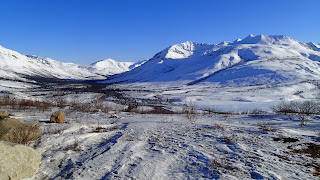
Yukon Photo credit Tyler Murchie
Prehistoric horses survived longer in North America than previously thought, according to a new study.

Researchers at McMaster University, Hamilton, Canada, used DNA capture-enrichment techniques, that they had developed previously, to find ancient DNA from plants and animals in as little as a teaspoonful of soil. The soil for the study was taken from core samples collected from the permafrost at four sites in the Klondike region of central Yukon, in northwest Canada. 


The work is published in the journal Nature Communications.


Tyler J. Murchie  and co-authors explain that environmental samples, such as soil, contain fragments of genetic material. Most ancient environmental DNA (eDNA) is broken down by bacteria or by physical or chemical processes. However, some of this eDNA becomes bound to sedimentary minerals, which protects it, especially when it is frozen. 


By extracting and analysing this sedimentary ancient DNA (sedaDNA), the research team was able to build up a picture of the plant and animal ecosystems from 30,000 to 4000 years ago. 


By analysing the DNA, the research team could rebuild the fluctuating animal and plant communities at different time points. Of particular interest was the Pleistocene-Holocene transition, an unstable climatic period 11,000-14,000 years ago when a number of large species such as mammoths, mastodons and sabre-toothed cats disappeared.

The analysis reveals that mammoths and horses were already in steep decline prior to the climatic instability, but they did not immediately disappear due to human overhunting as previously thought. In fact, the DNA evidence shows that both the woolly mammoth and North American horse persisted until as recently as 5,000 years ago.

The authors explain that through the early Holocene (starting about 11,000 years ago), the Yukon environment continued to experience massive change. Formerly rich grasslands - the “Mammoth Steppe”- were overrun with shrubs and mosses, species no longer held in check by large grazing herds of mammoths, horses and bison. Today, grasslands do not prosper in northern North America, in part because there are no megafaunal “ecological engineers” to manage them. 

“The rich data provides a unique window into the population dynamics of megafauna and nuances the discussion around their extinction through more subtle reconstructions of past ecosystems” says evolutionary geneticist Hendrik Poinar, a lead author on the paper and director of the McMaster Ancient DNA Centre.

This work builds on previous research by McMaster scientists who had determined woolly mammoths and the North American horse were likely present in the Yukon approximately 9,700 years ago. Better techniques and further investigation have since refined the earlier analysis and pushed forward the date even closer to contemporary time. 

“Now that we have these technologies, we realize how much life-history information is stored in permafrost,” explains Tyler Murchie, a postdoctoral researcher in McMaster’s Department of Anthropology and a lead author of the study.

“The amount of genetic data in permafrost is quite enormous and really allows for a scale of ecosystem and evolutionary reconstruction that is unparalleled with other methods to date” he says.

“Although mammoths are gone forever, horses are not” says Ross MacPhee of the American Museum of Natural History, another co-author. “The horse that lived in the Yukon 5,000 years ago is directly related to the horse species we have today, Equus caballus. Biologically, this makes the horse a native North American mammal, and it should be treated as such.” 

Scientists also stress the need to gather and archive more permafrost samples, which are at risk of being lost forever as the Arctic warms.


For more details, see:


Collapse of the mammoth-steppe in central Yukon as revealed by ancient environmental DNA

Tyler J. Murchie, Alistair J. Monteath, Matthew E. Mahony, George S. Long, Scott Cocker, Tara Sadoway, Emil Karpinski, Grant Zazula, Ross D. E. MacPhee, Duane Froese & Hendrik N. Poinar 

Nature Communications (2021) vol 12, Article number: 7120 


https://doi.org/10.1038/s41467-021-27439-6


For a video presentation, see:

https://player.vimeo.com/video/654303546

Saturday, August 22, 2020

Bronze Age horsemanship

 New research suggests that horse riding may have emerged earlier than generally thought.

Scientists have discovered new facts about the use of horses in the Bronze Age. A team of scientists, from Khazakhstan, Russia and the US, showed that people of the Andronova culture mastered horse riding several centuries earlier than is commonly believed.

The researchers came to this conclusion when working with the remains of two Late Bronze Age horses from Kurgan (burial mound) no 5 of the Novoil’inovskiy 2 Cemetery, near the city of Lisakovsk in the  Republic of Kazakhstan.

They discovered that changes on the horses’ skulls that were consistent with having been bridled.  Remnants of bridles were found near the horses, including cheekpieces that showed wear that could have been caused by use with soft bits.

The scientists conclude that the bone pathologies and the wear on the cheekpieces were most consistent with the horses being used for riding or chariotry.

Igor Chechushkov, of the South Ural State University (SUSU) took part in the laboratory and analytical part of the study. He analysed the burials, and radiocarbon dating information from the horse bones and artifacts removed from the site.

"We received radiocarbon dates that made it possible to date the complex with an accuracy of several decades. A comparison of these dates with the known ones allowed us to conclude that horsemanship, that is, the use of horses in military affairs, began to be practiced much earlier than many researchers had previously expected.”

It had been thought that horsemanship evolved around 900 BC. But Chechushkov points out “Our materials suggest that armed horsemen who fought on horseback could have appeared in the Eurasian steppes no later than 1600 BC.”

For more details, see:

Early evidence for horse utilization in the Eurasian steppes and the case of the Novoil’inovskiy 2 Cemetery in Kazakhstan

Igor V.Chechushkov, Emma R.Usmanova, Pavel A.Kosintsev

Journal of Archaeological Science: Reports Volume 32, August 2020, 102420

https://doi.org/10.1016/j.jasrep.2020.102420


See also:

On the Earliest Use of Plate-Formed Cheekpieces and the Emergence of Horse Riding (Based on Finds from the Novoilyinovskiy II Cemetery in Northern Kazakhstan)

I.V. Chechushkov, A. A. Ovsyannikov, E. R. Usmanova

Archaeology, ethnology & anthropology of Eurasia (2020) Vol 48, No 2

https://doi.org/10.17746/1563-0110.2020.48.2.049-058

Thursday, May 30, 2019

The origins and development of modern horses


Horses were domesticated long after dogs, cattle and pigs. However, once humans started riding and milking horses, and once they controlled their reproduction, the whole face of history would no longer be the same. In particular, the horse transformed the way we made war, the way we travelled the world and the way we transported goods.

An international team of 121 scientists led by Prof Ludovic Orlando and in collaboration with Barbara Wallner from the Institute of Animal Breeding and Genetics at Vetmeduni Vienna have been reconstructing the complex history of domestic horses. They have not only tracked changes in the horse genome from the very early stages of domestication but also followed the legacy of important equestrian civilizations until the revolution of modern agronomy.

The work brought together a multidisciplinary research team, involving archaeologists, geneticists, and evolutionary biologists across 85 institutions around the world. 

By studying genome-wide data from 278 ancient equids spanning the last 42,000 years, the research team gained insights into how ancient equestrian civilizations managed, exchanged, and bred horses. Their studies revealed a vast loss of genetic diversity as well as showing the existence of two extinct lineages of horses that failed to contribute to modern domestic animals.

Antoine Fages, leading author of the study, which is published in the journal Cell, undertook most of the molecular work. He says: “With the new dataset generated, horses become the animal species with the largest number of ancient genomes characterized after humans. This extensive dataset provides unprecedented information on how the animal looked like in the past but also on how herders exchanged, mixed and selected their horses in the course of human history.”

The scientists discovered that a previously unknown lineage of horses was present in Iberia until at least 4,000 years ago. This lineage no longer exists and contributed only marginally to the genome of modern horses around the world. The same is true for another lineage of horses that roamed the vast territory of Siberia in the Upper Paleolithic and until the third millennium BCE, from the northern end of Yakutia to the Altai mountains range. The work, thus, demonstrates that even though only two main lineages of horses exist today – the domestic horse and the Przewalski’s horse, the available diversity of lineages was considerably larger by the time humans first domesticated the animal.

Pablo Librado, who coordinated the bio-informatic analyses, states: “Iberia has a long-standing tradition of horse breeding and a cave art record featuring many horses. It was, thus, proposed as one possible domestication centre for horses. Our new genome information reveals for the first time that a yet undescribed horse lineage was roaming in the peninsula some four to five thousand years ago. They however disappeared and are not the ancestors of the modern horses in Iberia and more generally around the world.”

Previous work from the Orlando team demonstrated that Przewalski’s horses represent the descent of a lineage that was first domesticated in Central Asia during the Copper Age, some 5,500 years ago. Modern domestic horses, however, were found to descend from another genetic lineage that spread across Eurasia during the early Bronze Age, by the end of the third millennium BCE. The new genetic data generated now help track how this new lineage has developed since then and diversified into the hundreds of modern breeds that we know today.

The research reveals that the 7th-9th century AD was marked by a major transition in Europe. So much so that the only horse breeds genetically close to the horses populating the main continent during the Iron Age and Gallo-Roman times can only be found now in some British Isles and in Iceland. These were probably brought to these islands by the Norse people. 

In mainland Europe, however, another horse group tracing its origins in the Persian Sassanids became so popular that it provided the source of most modern breeds found across the planet. This influence was not limited to Europe but also extended to Central Asia.

In order to identify the factors that underlie the increasing success of this type of horse, the researchers scanned the genomes of Byzantine horses, which descended from this new type. They found signatures of positive selection in no fewer than 11 genes involved in the development of the body plan This suggests that the morpho-anatomical traits first acquired in Persian Sassanid horses became increasingly appreciated and spread out following the Persian wars and the Muslim expansion. 

In addition to detecting changes in the horse morpho-anatomy, the researchers could leverage their extensive genome time-series to track the frequency of specific gene variants underpinning key equine traits, such as coat coloration, speed and gait. The authors reveal that several gene variants associated with racing performance increased in frequency during the last 1,500 years. The first occurrence of the DMRT3 ambling gene variant was found in a specimen that lived in the late Middle Ages, and increased in frequency in the past centuries. This suggests that locomotor changes in speed and gait types were selected mostly during the last millennium.

But the most dramatic change the researchers identified was not in the far distant past, but in the modern era. Orlando adds: “Our most striking finding was that the overall horse genetic diversity was relatively steady for most of the last four millennia. However, it dropped significantly during the last few centuries, at a time coincident with the development of close studs and modern breeding techniques”.

This is perhaps the most important lesson of this work: the modern world we live in can hardly give an idea of the diversity of domestic resources that were available in the past, be it even a few centuries ago.

For more details, see:

Tracking Five Millennia of Horse Management with Extensive Ancient Genome Time Series
Fages, A.,and others.
Cell.(2019) Vol 177, p 1419-1435.e31,

Saturday, May 18, 2019

Equitation Science Conference


The early bird deadline for the 2019 International Society for Equitation Science (ISES) conference is fast approaching! Book by June 1 and receive a discount on your registration fees.

Held this year in Guelph, Ontario, Canada from August 19-21, with the theme of "Bringing science to the stable", the conference explores our relationship with horses in the past, present and future.

Speakers announced so far include:

  • ·         Dr. Sandra Olsen (Curator-in-Charge, Biodiversity Institute and Natural History Museum, University of Kansas) will trace how our relationship with horses began.
  • ·         Dr. Camie Heleski (Senior Lecturer, University of Kentucky) will describe the field of Equitation Science and what we have learned about horse-human relationships.
  • ·         Dr. Nic de Brauwere (Head of Welfare, Rehabilitation and Education, Redwings Horse Sanctuary, UK) will discuss how human behaviour change into the future can improve equine welfare.
  • ·         Dr. Andrew McLean (Equitation Science International, Australia) will present similarities and differences in the application of learning theory across species.

For full details, see: