Monday, January 24, 2022

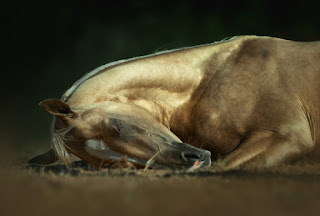
Monitoring recumbency as equine welfare indicator

 Although horses can doze standing up, they have to lie down to experience deep (rapid eye
movement - REM) sleep, because of the profound muscle relaxation that occurs in REM sleep.
   

Normally, horses will spend about 30 minutes a day in REM sleep. They may become sleep deprived if they are unable or unwilling to lie down – for example because of insecurity, or orthopaedic problems. Such horses may lapse into REM sleep while standing and then collapse. 


Zsofia Kelemen and co-workers at the University of Veterinary Medicine Vienna conducted a study to investigate the effect of age and orthopaedic problems on the time spent lying down.  A report of the work is published in the journal Animals.


A total of eighty-three horses, ages ranging from two to 32 years old, with or without orthopaedic problems, were involved in the study.


The research team used wearable automated motion sensors to monitor the time the horses spent lying, moving, and standing. Horses were tracked continuously for 60-hour sessions. Horses with abnormal recumbency patterns were monitored more often and for longer.


Eight horses, all with chronic orthopaedic disease, showed signs of REM sleep deficit. They were either seen to collapse, or had abrasions over their knees presumed to be due to falling onto the knees. These horses spent significantly less time lying down.


However, in this study, neither age nor lameness due to chronic orthopaedic disease significantly influenced the time spent lying down.


The authors conclude that wearable sensor technology can be used to identify horses with low recumbency times at risk for REM sleep deficiency and to assess and monitor equine welfare objectively. 


For more details, see: 


Recumbency as an Equine Welfare Indicator in Geriatric Horses and Horses with Chronic Orthopaedic Disease. 

Kelemen Z, Grimm H, Long M, Auer U, Jenner F. 

Animals. 2021; 11(11):3189. 

https://doi.org/10.3390/ani11113189

Sunday, January 23, 2022

Study highlights factors influencing risk of eventing falls

A recent study has identified factors associated with an increased risk of falls during the cross-country phase of eventing, and has suggested modifications that could reduce the risk of injury – making it safer for horse and rider.

Higher-level events, longer courses, more starters in the cross-country phase and less experienced horses and athletes all showed an increased risk.Identifying these risk factors allows riders and event organisers to assess the level of risk for individual horse, rider and event combinations. 


The research, published in the Equine Veterinary Journal, recommends simple improvements such as adjusting minimum eligibility requirements (MERs) to ensure horses and riders always compete at a level appropriate to their ability.


The study, led by Bristol Veterinary School’s Dr Euan Bennet and Professor Tim Parkin, with Dr Heather Cameron-Whytock of Nottingham Trent University, was funded by Federation Equestre Internationale (FEI).


It included data from every horse start worldwide in all International, Championship, Olympics and World Equestrian Games competitions between January 2008 and December 2018. Information from National Federation events was not included. 


Of 202,771 horse starts during this period, 187,602 started the cross-country phase. Of these, 1.5 per cent recorded a fallen horse and 3.5 per cent had an unseated rider.


At least 50 riders and 109 horses have died since 2000 across all levels of competition worldwide.


Bristol Veterinary School’s Dr Euan Bennet said: “Eventing is an exciting equestrian sport, but horses and riders sometimes get injured during competitions. Occasionally they are very seriously injured, even fatally. We have gained a detailed understanding of the risk factors that make horses more likely to fall, so that we can provide actionable advice to governing bodies on how to reduce the number of horse falls, and therefore injuries and fatalities among horses and riders.


“This data is about probabilities and we would never say don’t ride because you’re going to have a fall, but we might say what we can see is according to your risk profile you’re in the top 5% at risk of a fall.”


The study identified the following factors as contributing to a fall:


  • Horses competing at higher levels.
  • Horses competing over longer cross-country course distances.
  • A higher number of starters at the cross-country phase.
  • Mares were at increased odds compared with geldings.
  • Horses whose previous start was longer than 60 days ago.
  • Horses who had previously made fewer starts at the level of their current event.
  • At the human athlete level, male athletes were at increased odds of experiencing a fall, compared with female athletes.
  • Younger athletes were at increased odds compared with older athletes.
  • Less experienced athletes were more likely to fall than their more experienced counterparts.
  • Athletes whose previous start was more than 30 days ago were at increased odds compared with athletes who last started within 30 days.
  • Athletes who did not finish their previous event, for any reason, were at increased odds compared with those who successfully finished their previous event.
  • Horse-athlete combinations who recorded a score in the dressage phase that was higher than 50 (i.e. poor performance) were at increased odds of falling during the cross-country phase compared with combinations who recorded a dressage score of 50 or less.


The researchers now hope the FEI will use this new evidence to implement evidence-based rules for eventing which protect the safety of athletes and horses without compromising on competitiveness.


For more details, see:


Fédération Equestre Internationale eventing: Risk factors for horse falls and unseated riders during the cross-country phase (2008-2018)

Euan D. Bennet, Heather Cameron-Whytock, Tim D. H. Parkin

Equine Veterinary Journal (2021) 13522


https://doi.org/10.1111/evj.13522

Friday, January 21, 2022

Sustainability in British racing


Concerned about the impact of climate change on equine welfare in the racing industry? Here’s your chance to have a say. 

An online questionnaire, open to anyone involved in racing, has opened to help identify environmental activity, expertise and interest across British racing and breeding.


The questionnaire forms part of a wider assessment of progress on environmental sustainability, commissioned last year by industry leaders and initiated and funded by the Racing Foundation.


The work aims to build a clearer overall picture of current environmental activities and expertise across racing and breeding. It is hoped that this will identify some of the key issues, risks, and opportunities for British racing, and make recommendations about what steps the industry could take to start embedding environmental sustainability in its long-term planning.


In a statement, Brant Dunshea, British Horseracing Authority Chief Regulatory Officer, said: “Climate change and sustainability are major challenges for our sport, given how dependent we are on the environment, transportation, and the use of essential resources.

“There is a real opportunity here for British racing to lead progress in this area, taking positive action to find effective solutions to the challenges we face – and crucially grasp some of the opportunities.


Rob Hezel, Chief Executive of the Racing Foundation, said: “A large amount of work has already been carried out across the industry, ranging from decarbonisation efforts to grassland management and waste reduction, so this work will help build an overall picture of where we are and where we want to be.


To complete the questionnaire, which runs until 14th February, go to:


https://form.jotform.com/220072452759355

Monday, January 17, 2022

Free online Horse Management Seminar from Rutgers Equine Science Center


Rutgers University Equine Science Center’s annual Horse Management Seminar will be held in a virtual format this year over three Tuesday evenings: February 8th, 15th, and 22nd. Each evening the event will start at 6:30PM (EST) and conclude at 8:30PM (EST) and is free to attend.


The first, on February 8th, will cover recent advances in veterinary medicine with an emphasis on equine diseases and rehabilitation and conditioning with Drs. Mark Crisman and Sarah Gold.


On February 15th, Drs. Samantha Brooks and Amanda Adams will cover genomics and equine metabolic syndrome.


The final evening will feature topics in equine nutrition with Dr. Weinert-Nelson, a recent Rutgers graduate, and Anna Draeger. 


For more details, and to reserve your virtual seat, go to :


https://go.rutgers.edu/2022HMS.

Behaviour of retrained Thoroughbred racehorses

 
Thoroughbred racehorses have been bred with one purpose in mind – racing. It is often thought that their temperament may result in erratic or dangerous behaviour making them unsuited to other disciplines.


Lillian Hellmann, based at the Equine Genetics and Genomics Group at the University of Sydney, Australia, and colleagues conducted a study to see if such perceptions are justified.


The study assessed the behavioural differences, as noted by the owners, between thoroughbred horses bred for racing that entered an alternate discipline after retiring from racing and horses of other breeds. A full report is published in Applied Animal Behaviour Science.


The authors analysed data from 313 horses compiled using an online questionnaire. 


Responses were received from a total of 25 countries, with the majority coming from Australia, the United States and the United Kingdom.


Horses included in the study were used in four main disciplines: dressage, eventing, show jumping and recreational riding.


The analysis revealed few significant differences in behaviour reported by the owners between horses bred for racing and those bred for other pursuits. 


Interestingly, and perhaps surprisingly, the researchers reported that where differences did occur, it was generally the thoroughbreds that were thought to behave more favourably. 


They report that owners considered Thoroughbreds showed more “dominance / aggression” than horses bred for other disciplines. Despite that, Thoroughbreds were seen as more social and were reported to show higher levels of “self-control.”


They suggest that as the average age of a racing thoroughbred is well below that of horses competing in other disciplines, perhaps the dangerous reputation of thoroughbreds is more a reflection of their youth and relative inexperience rather than purely breed predisposition.


They conclude: “Although this study does suggest some potential distinctions between the behaviors of thoroughbreds and horses bred for other disciplines, the notion that thoroughbreds may be unsuitable for certain disciplines based solely on their behavior and associated temperament is not supported.”


For more detail, see:


Owner-perceived behaviour in thoroughbred horses in secondary careers – A pilot study

Lillian Hellmann, Natasha A.Hamilton, Elizabeth A.Staiger, Marina Solé, Brandon D.Velie

Applied Animal Behaviour Science (2021) Vol 244, 105480


https://doi.org/10.1016/j.applanim.2021.105480

Saturday, January 15, 2022

Brush up on your nutrition and laminitis knowledge with free webinar

Horse owners can take advantage of a series of free nutrition-themed webinars, thanks to SPILLERS™.

The first webinar, to be held on 20th January 2022 at 8pm (GMT), will be hosted by SPILLERS™ nutritionist Gina Burgoyne, and is entitiled “Tips for winter weight gain.” It will cover forage, calories, fibre and oil diets and practical advice.


On Thursday 10th February, 8pm, Gina Burgoyne will present a webinar on “Tips for horses prone to gastric ulcers.” The discussion will cover: who is at risk; what to look out for; how nutrition plays a role; and forage.


The third webinar, on Thursday 3rd March, 8pm, “Managing your laminitic horse” will be hosted by Isabel Harker and Sarah Nelson. Topics will include: who is at risk; symptoms; how nutrition plays a role; body condition; and grazing tips.


“Whether you have a horse or a pony, and whether you are looking for safe weight gain, weight loss or a maintenance diet these webinars are for you,” said Clare Barfoot RNutr, Marketing and Research and Development Director at Mars Horsecare UK, home of the SPILLERS brand. 


“The webinars incorporate answers to many of the questions we receive via our Care-Line, together with the latest in equine nutrition science, making them highly relevant for every level of horse owner. And the best news is they are free and accessible to all.”


The webinars will be hosted on Microsoft Teams. Each session is free of charge and will last for approximately one hour. 


If you would like to join, sign up at:


https://www.spillers-feeds.com/webinars


 A link to join the webinar will then be emailed to you the day before the session.

Pilot study suggests role for IL-2 in sarcoid treatment.

 Sarcoids are the most common skin tumour in horses. It is estimated that 6-7% of horses in the United Kingdom are affected. 

Currently there is no universally effective treatment for sarcoids and if treatment fails, the sarcoids will often come back worse than they were in the first place. Although the disease is rarely life threatening, many horses with sarcoids are euthanased because the condition is untreatable or because the horse is unsellable. 


A study by Johanna Loschelder-Ostrowski and colleagues assessed the use of canarypox expressing feline Interleukin-2 (IL-2) in the treatment of equine sarcoids.


Interleukin (IL)-2 is one of the key cytokines (proteins involved in cell signalling). It stimulates cell mediated immunity, activating a range of T-cells. IL-2 is used in human medicine, including for treating cancerous conditions such as metastatic renal cell carcinomas and metastatic melanoma.


A canarypox virus vector, which has been genetically modified to contain a gene to make it produce IL-2, was used in the study. (A licenced product is available for use in the treatment of fibrosarcoma in cats.) The canarypox virus does not spread or multiply in cats or other mammals.


The technology is widely used in the production of vaccines for horses and other species (such as some equine influenza and West Nile virus vaccines).


Firstly, the research team carried out a safety trial in four healthy horses. None of the horses showed significant adverse effects after two treatments.


They then assessed its use to treat 20 horses with sarcoids. The sarcoids were injected twice seven days apart, using the recombinant canarypox virus expressing feline IL-2.


None of the horses with equine sarcoids showed significant adverse effects after intratumoural treatment.


The researchers report that “complete regression was achieved in eight horses (40%) and partial regression in two horses (10%). No change in sarcoid size was observed in two horses (10%) and the disease progressed in five horses (25%). Sarcoids of three horses (15%) showed initial response followed by tumour growth.”


However, they noticed a long delay between the first injection and the beginning of tumour remission. “Of the 68% of sarcoids that did show remission after 23 months, remission started after a median time of 30.4 ± 5.4 weeks.” 


Reporting their work in the journal Veterinary Dermatology, the authors conclude: “In summary, in this clinical pilot study, the treatment of equine sarcoids with canarypox virus locally expressing IL-2 was easy and safe for both user and horse. Equine sarcoids injected with canarypox virus expressing feline IL-2 showed a reduction in tumour size or a complete remission of the tumour in 50% of cases.”


They add: “Further studies are necessary to research vector and feline IL-2 effects in horses, establish an optimal treatment regime for equines and verify the results in a larger population of patients.”


For more details, see:


Treatment of equine sarcoids using recombinant poxviruses expressing feline interleukin-2

Johanna Loschelder-Ostrowski, Judith Christine Winter, Roswitha Merle, Robert Klopfleisch, Heidrun Gehlen

Veterinary Dermatology (2021)


https://doi.org/10.1111/vde.12941


Monday, December 20, 2021

Fragile Foal Syndrome not confined to Warmbloods

 Fragile Foal Syndrome (FFS) is a lethal genetic disease of connective tissue which has been reported most frequently
in Warmbloods. However, a recent study has found that the genetic defect responsible is present across a range of other breeds.
 

Affected foals are typically aborted during late gestation or born as non-viable foals. If alive at birth, they tend to have problems such as fragile skin, skin defects, hyperextension of the joints and difficulty breathing, and generally require euthanasia within days.


FFS has been shown to be an autosomal recessive genetic condition. Carrier animals with one copy of the defective gene (PLOD 1 c.2032 G>A) will be normal, but if mated with another carrier may produce an affected foal.


It is now known that the condition is not confined to Warmblood horses.  


Research by Katie Martin and colleagues at Etalon diagnostics (a company that offers genetic testing), together with Dr Samantha Brooks at the University of Florida Gainesville and Dr Scott Mclure, of Midwest Equine, Iowa, found that the genetic defect occurs across other horse populations.


The team examined samples from 7343 horses from various breeds or type of horse.

The defective gene occurred in 5.32% of Warmblood type horses.  In other affected breeds it was less than 1%. They found no sign of the defect in Arabians, Iberian or Thoroughbreds.


Studies of the frequency of the defect in aborted or stillborn foals are lacking, so

the potential economic effect of FFS on the horse breeding industry is not known.


The researchers suggest that pre-breeding testing should be used to inform the breeding program – avoiding breeding two carriers, together to reduce the frequency of the FFS gene in the population, and reduce the number of lost pregnancies.


For more details, see:


Fragile Foal Syndrome (PLOD1 c.2032G>A) occurs across diverse horse populations

Katie Martin, Samantha Brooks, Micaela Vierra, W. Tyler Lafayette, Scott McClure, Meredith Carpenter and Christa Lafayette

Animal Genetics (2021) vol 52, p137.

https://doi.org/10.1111/age.13020

Sunday, December 19, 2021

Reconstructing prehistory from a teaspoonful of soil

Yukon Photo credit Tyler Murchie
Prehistoric horses survived longer in North America than previously thought, according to a new study.

Researchers at McMaster University, Hamilton, Canada, used DNA capture-enrichment techniques, that they had developed previously, to find ancient DNA from plants and animals in as little as a teaspoonful of soil. The soil for the study was taken from core samples collected from the permafrost at four sites in the Klondike region of central Yukon, in northwest Canada. 


The work is published in the journal Nature Communications.


Tyler J. Murchie  and co-authors explain that environmental samples, such as soil, contain fragments of genetic material. Most ancient environmental DNA (eDNA) is broken down by bacteria or by physical or chemical processes. However, some of this eDNA becomes bound to sedimentary minerals, which protects it, especially when it is frozen. 


By extracting and analysing this sedimentary ancient DNA (sedaDNA), the research team was able to build up a picture of the plant and animal ecosystems from 30,000 to 4000 years ago. 


By analysing the DNA, the research team could rebuild the fluctuating animal and plant communities at different time points. Of particular interest was the Pleistocene-Holocene transition, an unstable climatic period 11,000-14,000 years ago when a number of large species such as mammoths, mastodons and sabre-toothed cats disappeared.

The analysis reveals that mammoths and horses were already in steep decline prior to the climatic instability, but they did not immediately disappear due to human overhunting as previously thought. In fact, the DNA evidence shows that both the woolly mammoth and North American horse persisted until as recently as 5,000 years ago.

The authors explain that through the early Holocene (starting about 11,000 years ago), the Yukon environment continued to experience massive change. Formerly rich grasslands - the “Mammoth Steppe”- were overrun with shrubs and mosses, species no longer held in check by large grazing herds of mammoths, horses and bison. Today, grasslands do not prosper in northern North America, in part because there are no megafaunal “ecological engineers” to manage them. 

“The rich data provides a unique window into the population dynamics of megafauna and nuances the discussion around their extinction through more subtle reconstructions of past ecosystems” says evolutionary geneticist Hendrik Poinar, a lead author on the paper and director of the McMaster Ancient DNA Centre.

This work builds on previous research by McMaster scientists who had determined woolly mammoths and the North American horse were likely present in the Yukon approximately 9,700 years ago. Better techniques and further investigation have since refined the earlier analysis and pushed forward the date even closer to contemporary time. 

“Now that we have these technologies, we realize how much life-history information is stored in permafrost,” explains Tyler Murchie, a postdoctoral researcher in McMaster’s Department of Anthropology and a lead author of the study.

“The amount of genetic data in permafrost is quite enormous and really allows for a scale of ecosystem and evolutionary reconstruction that is unparalleled with other methods to date” he says.

“Although mammoths are gone forever, horses are not” says Ross MacPhee of the American Museum of Natural History, another co-author. “The horse that lived in the Yukon 5,000 years ago is directly related to the horse species we have today, Equus caballus. Biologically, this makes the horse a native North American mammal, and it should be treated as such.” 

Scientists also stress the need to gather and archive more permafrost samples, which are at risk of being lost forever as the Arctic warms.


For more details, see:


Collapse of the mammoth-steppe in central Yukon as revealed by ancient environmental DNA

Tyler J. Murchie, Alistair J. Monteath, Matthew E. Mahony, George S. Long, Scott Cocker, Tara Sadoway, Emil Karpinski, Grant Zazula, Ross D. E. MacPhee, Duane Froese & Hendrik N. Poinar 

Nature Communications (2021) vol 12, Article number: 7120 


https://doi.org/10.1038/s41467-021-27439-6


For a video presentation, see:

https://player.vimeo.com/video/654303546

Saturday, December 18, 2021

A cheaper alternative for URT scoping

Is there a cheaper alternative to the traditional endoscopes used for examination of the upper respiratory tract (URT) of horses?

Flexible endoscopes have proved invaluable for inspecting the inner workings of the equine respiratory system for over 40 years. The equipment is expensive and so is not always readily available. 


Borescopes are commonly used in industry for tasks such as the inspecting the inside of engines and other confined spaces.  A wide variety of types are available, most considerably less expensive than medical grade endoscopes. 


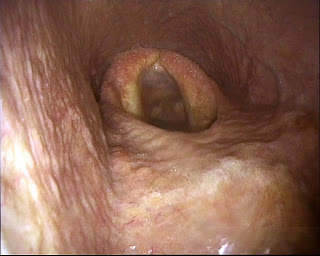
Researchers in the Faculty of Veterinary Medicine, Ghent University, investigated the suitability of a flexible and steerable borescope connected to a smartphone for examining upper respiratory tract problems in horses. Zoe Neuchermans and her colleagues in the department of Large Animal Internal Medicine conducted a study involving a series of clinical cases. Horses were inspected first with a flexible borescope and then with the standard flexible endoscope.


They made digital recordings of upper respiratory tract including structures of interest (depending on the clinical case). These were later reviewed by an observer who did not know which device had been used to make the recording. The work was presented at the British Equine Veterinary Association Congress 2021 and has been published in the Equine Veterinary Journal.


The authors report that “borescope and endoscope grading scores for pharyngeal lymphoid hyperplasia, recurrent laryngeal neuropathy and tracheal mucus were identical in 88/100, 93/100 and 48/59 horses, respectively. The remainder differed only one (sub)grade.”


The only problem they reported was that they had to replace the borescope after about 45 examinations as the steering mechanism started to fail ,which limited the field of view.


Although their study was limited to only one of the many types of borescope available, the researchers came to the conclusion that a flexible, steerable borescope, connected to a smartphone, provides a cheap alternative to perform URT endoscopy in horses.


For more details, see: 


Diagnosis of upper respiratory tract disorders in horses using a cheap, flexible and steerable borescope

Z. Neuckermans; E. Paulussen; L.-M. Verhaeghe and G. van Loon.

Equine Vet J (2001) Vol 53, S55, p22-23

 https://doi.org/10.1111/evj.33_13492

Friday, December 17, 2021

Fungal changes in gut of horses with grass sickness

Horses with Grass Sickness have differences in the population of fungi (“mycobiota”) present within in the gut
compared with healthy horses, a recent study has revealed.

Equine grass sickness (EGS, also known as equine dysautonomia) damages the autonomic nervous system – the part of the horse’s nervous system that controls involuntary functions. Its effects are particularly apparent in the gastro-intestinal tract. Clinical signs range from depression, with difficulty eating and swallowing, to reflux of stomach contents, weight loss and death. 

The exact cause is unknown, but researchers now know a lot about risk factors to be avoided and believe that a type of toxin is involved.  Is EGS is associated with ingestion of mycotoxin-producing fungi? 

Researchers, led by Bruce McGorum at the University of Edinburgh, conducted a study to identify potential causal fungi. They analysed the mycobiota within the gut contents of horses with grass sickness and compared their findings with samples taken from horses that died from reasons other than gastro-intestinal or neurological problems. They also analysed faecal samples from unaffected horses grazing the same pasture as horses with grass sickness.

They found a very rich and diverse gastro-intestinal mycobiota in all the horses. The mycobiota appeared to be richer (ie containing more different types of fungi) and more diverse (a more even distribution of the types of organism) in grazing horses. Mycobiota richness was greater in horses with EGS. 


The research team identified 56 key “phylotypes” that were more common in EGS samples. Many of these key phylotypes were extremophiles (organisms able to survive in extreme environments) or were considered likely to produce extrolites (secreted metabolites) that might have toxic effects.

These changes in the mycobiota have not been shown to cause EGS. Further work is needed to determine whether neurotoxic extrolites from these key phylotypes play a role in causing grass sickness.


For more details, see:

Equine grass sickness (a multiple systems neuropathy) is associated with alterations in the gastrointestinal mycobiome

Bruce C. McGorum, Zihao Chen, Laura Glendinning, Hyun S. Gweon, Luanne Hunt, Alasdair Ivens, John A. Keen, R. Scott Pirie, Joanne Taylor, Toby Wilkinson & Gerry McLachlan 

Animal Microbiome (2021) vol 3, Article number: 70 

https://doi.org/10.1186/s42523-021-00131-2

Monday, December 13, 2021

Search for a test to predict horses at risk of catastrophic injuries

In the ongoing quest to make racing safer for horses, researchers have been looking for a blood test to identify horses at risk of catastrophic fractures.

Other than sudden high energy trauma resulting from falls in jump racing, most racing fractures are thought to be fatigue injuries which result from cumulative stresses and strains.


Advanced imaging techniques, such as computed tomography (CT), magnetic resonance imaging (MRI), and positron emission tomography (PET) scans, have been used to identify damage that might lead to catastrophic fractures. However, such methods would be too expensive and impractical for routine use.


Most catastrophic fractures are found to have underlying pre-existing damage. The associated inflammation results in changes in the activity of various components of the inflammatory process, So checking for inflammatory markers might give warning of potential risk.


Dr Allen Page and colleagues at the University of Kentucky’s Maxwell H Gluck Equine Research Center, hypothesised that analysis of messenger RNA expression would detect significant changes in horses at risk for a catastrophic injury.


Their study involved blood samples collected from Thoroughbred horses in five racing jurisdictions across the United States. The work is published in the Equine Veterinary Journal.


They looked at 21 genes potentially associated with bone inflammation and remodelling,  and compared the levels of gene expression in horses that had suffered a catastrophic fracture with those in horses that had raced without injury.


Three markers, - insulin like growth factor 1 (IGF-1), matrix metalloproteinase 2 (MMP 2) and IL-1 receptor antagonist (IL1RN) - showed a marked difference between injured and non-injured horses. The researchers found that together, the three markers correctly identified horses at risk of catastrophic injury 76% of the time (and correctly excluded horses from being at risk 88% of the time)


They conclude that “Analysis of mRNA expression of specific genes in the future may be considered as an economical, accessible and non-invasive means by which horses at risk for catastrophic injury can be identified.”

For mor details, see:

Expression of select mRNA in Thoroughbreds with catastrophic racing injuries.
Page AE, Adam E, Arthur R, Barker V, Franklin F, Friedman R, Grande T, Hardy M, Howard B, Partridge E, Rutledge M, Scollay M, Stewart JC, Vale A, Horohov DW.
Equine Vet J. 2022; vol 54(1) pp63-73. 

https://doi.org/10.1111/evj.13423

Friday, November 26, 2021

Evaluating chronic pain in horses - podcast

In a podcast recorded recently, Dr. Kelly Diehl, Senior Director of Science and Communication at the Morris Animal Foundation spoke to Drs. Janny de Grauw and Diane Howard about the challenges associated with the detection and measurement of chronic pain in horses. 

Osteoarthritis, a leading cause of chronic pain in horses, is often not recognized by owners and so goes undertreated. 


Dr. de Grauw and Dr. Howard also discussed how they developed their pain assessment tool and how they hope this will help thousands of horses suffering from chronic pain.

Under Dr. de Grauw’s supervision, Howard developed a 15-item questionnaire based on changes in horse behaviour through interviews with owners of horses diagnosed with osteoarthritis. The questions cover posture, facial expressions, movement and behaviour.

“As veterinarians, we want to treat horses with painful and debilitating conditions like OA as effectively as possible,” said de Grauw. “How well we can manage their condition critically relies on recognition of subtle signs of (worsening) pain by owners and caregivers, who can then seek help.”

Listen to the podcast here:

https://podcasts.apple.com/us/podcast/evaluating-chronic-pain-in-horses/id1440087311?i=1000541242539

Thursday, November 25, 2021

Alternative approach to colic ops


Standing flank laparotomy may be a suitable option for surgical treatment of some cases of equine colic, a recent study has concluded.

The standard surgical approach for colic is through an incision in the ventral midline, with the horse under general anaesthesia. General anaesthesia poses additional risks over and above those of the surgery itself, and the personnel and equipment required increases the cost.


Operating through a flank incision would avoid the need for general anaesthesia and should be less expensive.


Marco Lopes and co-workers conducted a retrospective analysis of clinical records of 37 equids (horses, ponies and a donkey) treated using a standing flank laparotomy at five hospitals, between 2003 and 2020. Their findings are published in the Equine Veterinary Journal.


They did not include cases of small colon impaction in their analysis, as previous work had already shown that such cases could be dealt with using a flank incision.


Financial considerations were the main reason for the choice of technique. However, in ten cases of nephrosplenic entrapment the surgeon preferred a flank incision.


In seven animals the decision for euthanasia was taken immediately as they were found to have an untreatable condition, or the likelihood of survival was very poor.


Twenty of the 30 horses found to have a treatable condition survived. These conditions included small intestine inflammation or impaction, large colon displacement (especially nephrosplenic ligament entrapment) and sand impaction, 


The authors identify limitations of the technique:


  • the horse must stand still during the operation, so standing flank laparotomy cannot be performed in horses with severe colic that cannot be adequately controlled medically
  • additional peritoneal analgesia may be needed
  • access to the peritoneal cavity and the abdominal organs is not as good as with a ventral midline incision.
  • a second incision on the opposite flank may be needed
  • surgeons are not as familiar with standing flank laparotomy 
  •  scars in the flank are more likely to be seen than those in the ventral midline.


They conclude that this series of cases indicates that standing flank laparotomy is a viable approach for abdominopelvic exploration in some horses with colic attributed to conditions of the small intestine, caecum, large colon and peritoneum.


For more details, see: 


Standing flank laparotomy for colic: 37 cases

Marco A. F. Lopes, Joanne Hardy, Kelly Farnsworth, Raphael Labens, W. Y. Eunice Lam, Erik Noschka, Tiago Afonso, Claudia Cruz Villagrán, Luiz C. P. Santos, Montague Saulez, Gal Kelmer

Equine Vet J (2021)


https://doi.org/10.1111/evj.13511


Wednesday, November 24, 2021

Investigating a possible treatment for melanoma

Initial indications are that betulinic acid may prove to be a useful topical treatment for early-stage melanomas in horses. 

Melanomas are tumours of the pigment-producing melanocytes, and are among the most common equine tumours, occurring particularly in grey horses. Typically, they first appear as small, pigmented nodules, often under the tail. They usually grow slowly for years, but may infiltrate surrounding tissues, or appear elsewhere in the body.


Betulinic acid (BA) is a natural compound, found in the bark of several species of plants, such as the

white birch (Betula pubescens) after which it was named. It has been shown to have several potentially-useful pharmacological effects. Previous work has shown that BA can induce death (apoptosis) of melanocytes in cell culture. 


Research conducted in Austria looked at whether topical treatment with betulinic acid, or NVX-207, (a betulinic acid derivative) could be used to treat early cases of melanoma.


Lisa A. Weber and colleagues conducted a small, pilot study involving eighteen Lipizzaner mares with cutaneous melanomas (all having a diameter of no more than 15mm).


The horses, on a stud farm in Austria, were divided into three treatment groups: placebo cream; 1% BA cream; and 1% NVX-207 cream.


The research team treated a maximum of two tumours per horse. After topical application of the cream, the melanomas were covered to prevent it being rubbed off. The study extended over 13 weeks.


The researchers assessed progress with clinical examinations, measuring the tumours, monitoring them and the surrounding clinically normal skin, assessing the horses’ behaviour during cream application, and monitoring haematologic and blood biochemistry profiles. 


All horses tolerated the topical drug application well and did not object to it being applied. Two horses had mild colic during the study, which resolved with medical treatment. Both horses had a previous history of colic and the authors consider it very unlikely that the colic was related to the topical melanoma treatment.


The topical therapy resulted in part in clinically visible and measurable changes in small melanocytic lesions, which were reflected in skin depigmentation and reduction in tumour diameters and volumes. 


The researchers found a beneficial effect after treatment with BA towards the end of the treatment period. A few tumours in the placebo group also showed a decrease in size.


They conclude: “The results presented in this pilot study indicate that topical treatment of early-stage equine melanoma with 1% BA and 1% NVX-207 twice a day over a period of 13 weeks is feasible and safe.” 


“Especially after BA application, positive effects were observed toward the end of the treatment interval. This suggests that this approach might be a potential therapy for early-stage equine melanoma and, thus, reduce the health risks associated with the possible malignant degeneration of the tumours.”


However, the authors are unable to recommend the current treatment protocol for general use as the long treatment duration could lead to poor owner compliance. They suggest that modification of the pharmaceutical formulations may improve the clinical outcome and reduce treatment periods.


For more details, see:


Effects of Topically Applied Betulinic Acid and NVX-207 on Melanocytic Tumors in 18 Horses.

Weber, L.A.; Delarocque, J.; Feige, K.; Kietzmann, M.; Kalbitz, J.; Meißner, J.; Paschke, R.; Cavalleri, J.-M.V. 

Animals 2021, 11, 3250. 

https://doi.org/10.3390/ani11113250